
Psychological Descent: Cinema’s Darkest Mental Breakdown Narratives
Explore films that masterfully depict the unraveling of the human psyche through masterful storytelling
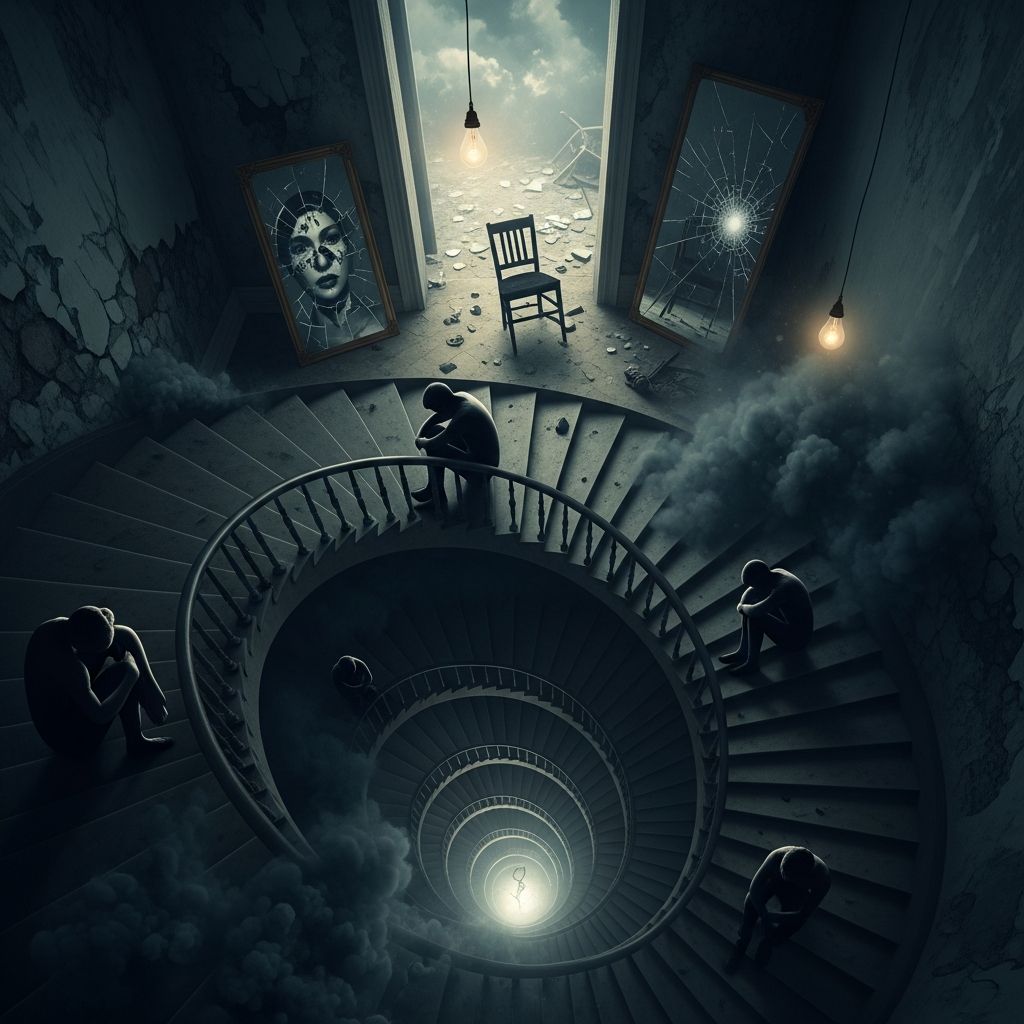
The film industry has long been fascinated with portraying the human mind’s capacity for fracture and dissolution. When filmmakers examine the journey toward psychological breakdown, they create narratives that both disturb and captivate audiences. These cinematic explorations delve into the darkest corners of consciousness, presenting characters whose grip on reality becomes increasingly tenuous. The resulting films serve as psychological case studies wrapped in compelling storytelling, allowing viewers to witness the multifaceted nature of mental deterioration from a safe distance.
What makes these narratives particularly compelling is their refusal to simplify mental illness or present it as a straightforward trajectory. Instead, they acknowledge the complexity of psychological states, the various triggers that precipitate decline, and the often-tragic consequences when individuals lack adequate support systems. These films transform personal struggle into universal human experience, creating spaces where audiences can confront uncomfortable truths about vulnerability and the fragility of mental stability.
The Anatomy of Character Dissolution in Modern Cinema
Contemporary filmmakers have developed sophisticated approaches to depicting psychological unraveling. Rather than relying solely on dramatic moments of crisis, modern cinema employs subtle visual and narrative techniques to show gradual deterioration. Camera work becomes increasingly erratic, color palettes shift toward unsettling hues, and sound design intensifies psychological discomfort as characters lose their mental moorings.
These productions recognize that true psychological breakdown rarely occurs instantaneously. Instead, it accumulates through layers of trauma, isolation, stress, and circumstances beyond individual control. The most effective films in this genre allow audiences to experience this accumulation firsthand, creating a visceral understanding of how environmental factors, personal history, and present circumstances converge to destabilize even seemingly resilient individuals.
Social Isolation as a Catalyst for Mental Decline
One recurring theme in films exploring psychological descent involves the devastating impact of social disconnection. Characters frequently find themselves marginalized from conventional society, lacking meaningful relationships or community support. This isolation becomes both symptom and cause—people already struggling mentally become further destabilized through loneliness, while their deteriorating conditions simultaneously push others away.
Filmmakers use this dynamic to examine how modern society inadvertently contributes to psychological crises. The absence of human connection, meaningful employment, or social purpose creates conditions where mental illness can flourish unchecked. These narratives implicitly critique systemic failures that leave vulnerable individuals without adequate support networks or therapeutic interventions.
Narrative Structures That Intensify Psychological Horror
Films depicting mental deterioration often employ non-linear storytelling or fragmented narrative structures that mirror their protagonists’ fractured consciousness. By disrupting conventional narrative flow, filmmakers create experiences where audiences become increasingly disoriented alongside the characters themselves. This formal innovation transforms viewing into an active psychological experience rather than passive observation.
Some productions utilize unreliable narration, where viewers cannot trust the protagonist’s perspective. This technique forces constant reassessment of events and motivations, creating persistent uncertainty that mirrors the confusion experienced by individuals losing contact with reality. The audience becomes complicit in psychological disorientation, achieving deeper empathy through shared confusion.
Visual Language and Cinematic Techniques
The visual presentation of psychological breakdown has evolved considerably. Contemporary films employ distorted imagery, split screens, rapid editing, and perspective shifts to externalize internal mental states. Lighting becomes increasingly harsh or unnaturally colored as characters deteriorate. Performance spaces grow more cramped or claustrophobic, trapping viewers within the character’s increasingly confined psychological world.
Sound design plays an equally crucial role, with ambient noise becoming intrusive, dialogue becoming fragmented, and silence taking on ominous qualities. These audiovisual choices transform cinema from a medium of narrative delivery into an instrument of psychological manipulation, positioning viewers uncomfortably close to the experience of mental breakdown.
Character Archetypes in Psychological Descent Narratives
The Socially Marginalized Individual
Many films explore protagonists existing on society’s periphery—individuals who already lack conventional social acceptance or integration. These characters frequently possess unusual behavioral patterns or unconventional interests that distinguish them from mainstream society. Their isolation becomes both self-imposed and externally enforced, creating a feedback loop where their differences generate rejection, which intensifies their disconnection from social norms.
These characters often harbor secret ambitions or fantasies that increasingly dominate their consciousness. As reality fails to align with internal expectations, the gap between desired and actual life widens dramatically. This cognitive dissonance becomes a primary driver toward psychological deterioration, particularly when individuals lack healthy mechanisms for processing disappointment and failure.
The Caregiver Burdened Beyond Capacity
Another significant archetype involves individuals responsible for supporting others’ well-being while simultaneously struggling with personal challenges. These characters frequently sacrifice their own mental health to maintain caregiving responsibilities, leading to situations where their psychological decline occurs almost imperceptibly until it reaches crisis point.
Films exploring this archetype often present caregiving as both noble and destructive—a fundamental expression of love that simultaneously erodes the caregiver’s capacity to maintain their own psychological equilibrium. The guilt and sense of obligation that typically characterize caregiving roles create additional barriers to seeking help or acknowledging personal suffering.
The Charismatic Manipulator
Some psychological descent narratives center on individuals whose psychological deterioration manifests through increasingly manipulative or harmful behavior. These characters may initially appear charming or persuasive, drawing others into their psychological orbit. Their mental instability expresses itself through the distortion of relationships and the creation of shared psychological delusion.
These characters represent a particular danger precisely because their charisma obscures their instability. Others become emotionally entangled in these relationships, their own psychological well-being becoming dependent on or intertwined with the primary character’s deterioration. The resulting narratives explore how psychological breakdown can become contagious, spreading throughout social networks when individuals become psychologically bonded to unstable individuals.
Thematic Exploration of Mental Illness and Responsibility
Contemporary films grapple with fundamental questions about agency and responsibility when mental illness is present. To what extent should individuals experiencing psychological deterioration be held accountable for harmful actions? How do audiences ethically engage with protagonists whose deterioration generates sympathetic understanding while their actions create genuine harm?
These narratives resist simplistic answers, instead acknowledging the tragic reality where both understanding and accountability remain essential. Individuals experiencing psychological crisis deserve compassion and support, yet the consequences of their actions—whether intended or not—remain genuinely harmful to others. The most sophisticated films in this genre hold both truths simultaneously, refusing to privilege one moral consideration over another.
The Role of Systemic Failure
Many psychological descent narratives implicate social systems in their characters’ deterioration. Mental health services prove inadequate, educational institutions fail to support students in crisis, employment systems offer no flexibility for mental health accommodation, and family structures collapse under strain. These films suggest that psychological breakdown rarely occurs in isolation—instead, it emerges from the convergence of individual vulnerability and systemic indifference or inadequacy.
By highlighting systemic factors, films exploring psychological descent move beyond pathologizing individual mental illness toward critiquing societal structures that leave vulnerable populations without adequate support. This perspective generates implicit calls for systemic change while maintaining focus on individual human suffering.
Available Streaming Platforms and Access
Films exploring psychological descent have become increasingly available through streaming platforms, democratizing access to these challenging narratives. Multiple distribution channels now offer these titles, with various platforms specializing in different genre elements or thematic focuses.
Streaming Distribution Options
- Subscription-based platforms offering curated collections of psychological dramas and thrillers
- Premium rental services providing access to recent theatrical releases
- Specialty horror and thriller platforms emphasizing psychological rather than visceral horror
- International streaming services with particular strength in artistic psychological cinema
- Free ad-supported platforms increasingly featuring independent psychological dramas
The availability of psychological descent narratives across multiple platforms reflects growing audience interest in complex psychological storytelling. Streaming services have recognized that audiences increasingly seek challenging, thoughtful narratives that reward sustained engagement and philosophical reflection.
Notable Examples and Their Contributions
Examination of Contemporary Psychological Narratives
Recent cinema has produced several notable explorations of mental deterioration that employ innovative narrative and visual techniques. These films demonstrate the medium’s capacity to externalize internal psychological experience, creating viewing experiences that transcend conventional storytelling.
One significant recent narrative focuses on how irrational fears can spread through social networks, destabilizing entire communities as collective anxiety escalates. The film tracks how individual psychological disturbance becomes amplified through social connection, examining the dangerous confluence of personal mental illness and collective psychology. This exploration reveals how psychological vulnerability remains deeply social—individuals rarely experience crisis in complete isolation.
Another prominent example investigates the formation of shared psychological delusion, where two individuals experiencing mental illness create a reinforcing psychological system that intensifies both their instability and their emotional connection. This narrative explores the paradox where psychological breakdown simultaneously isolates individuals while creating profound intimacy with others experiencing similar instability.
Additional notable films examine how historical trauma, social marginalization, and personal disappointment accumulate to generate catastrophic psychological breakdown. These narratives resist simple explanations, instead demonstrating how psychological deterioration emerges from complex interactions between individual psychology and social environment.
Critical Reception and Audience Response
Films exploring psychological descent often generate polarized critical and audience responses. Some viewers find these narratives excessively disturbing or exploitative, questioning whether depicting psychological deterioration in detail serves meaningful artistic purpose or merely sensationalizes mental illness.
Other audiences and critics argue that these films perform essential cultural work—forcing society to confront uncomfortable realities about mental health, systemic failure, and social marginalization. From this perspective, the challenge and discomfort generated by these narratives becomes ethically valuable, disrupting comfortable assumptions about mental health and forcing deeper engagement with social responsibility.
Critical discourse surrounding psychological descent films frequently emphasizes the distinction between meaningful exploration and gratuitous exploitation. The most respected examples typically demonstrate how the technical and narrative elements directly serve thematic investigation, with visual and auditory choices reinforcing psychological complexity rather than merely amplifying shock value.
Considerations for Viewing Psychologically Challenging Content
Films depicting psychological breakdown can generate genuine psychological discomfort in viewers. This discomfort represents an intentional artistic choice rather than accidental byproduct, as filmmakers deliberately structure these experiences to challenge and disturb audiences.
Viewers sensitive to depictions of mental illness, self-harm, or violence should approach these narratives cautiously, potentially seeking content warnings or reviews before viewing. The formal innovation and psychological depth these films often employ creates experiences that extend beyond entertainment into territory requiring genuine emotional preparation.
Conversely, for viewers seeking cinematic experiences that challenge and provoke meaningful reflection, psychological descent narratives offer opportunities to engage with cinema’s capacity for psychological exploration and moral complexity. These films demand active engagement rather than passive consumption, rewarding viewers willing to sit uncomfortably with disturbing subject matter.
The Evolution of Psychological Storytelling in Cinema
Cinema’s capacity to depict mental deterioration has evolved significantly as filmmaking techniques have become more sophisticated. Early psychological films relied heavily on visual distortion and performance to suggest mental instability. Contemporary productions employ more nuanced approaches, recognizing that psychological breakdown rarely presents as obviously deranged behavior.
Modern psychological descent narratives increasingly examine seemingly normal individuals whose internal experiences grow progressively unmoored from objective reality. This shift reflects evolving understanding of mental illness—recognition that psychological deterioration frequently remains invisible externally while generating profound internal chaos.
The influence of psychiatric and psychological research has also shaped contemporary cinema, with filmmakers drawing on clinical understanding of various mental illnesses to create more accurate and nuanced depictions. This scientific engagement generates narratives that feel psychologically authentic while remaining artistically compelling.
Frequently Asked Questions
What distinguishes psychological descent narratives from other thriller genres?
Psychological descent films center on internal mental deterioration rather than external threats. While traditional thrillers emphasize plot-driven action and external dangers, psychological descent narratives focus on how characters’ minds unravel, examining the progressive fracture of consciousness, perception, and psychological stability. The threat emerges from within rather than from external antagonists.
Are these films appropriate for general audiences?
Psychological descent narratives frequently receive mature content ratings due to depictions of violence, disturbing psychological states, and existential distress. Viewers should carefully review content warnings before viewing. These films appeal primarily to audiences seeking challenging, thought-provoking cinema rather than conventional entertainment.
How do filmmakers create psychological authenticity in these narratives?
Contemporary filmmakers often consult psychiatric professionals, research clinical cases, and study psychological literature to ensure authentic depiction of mental illness. Technical elements—cinematography, sound design, editing, and performance direction—reinforce psychological authenticity by externalizing internal mental states through formal innovation.
What psychological mechanisms do these films explore?
These narratives examine various psychological phenomena including dissociation, delusion, traumatic response, social isolation effects, anxiety escalation, and the breakdown of reality perception. They explore how individual psychology intersects with social environment, demonstrating that mental deterioration rarely results from single causes.
Where can viewers access these films?
Psychological descent narratives are available across multiple streaming platforms, including subscription services, rental platforms, and specialty channels dedicated to psychological drama and thriller content. Availability varies by geographic region and platform.
Conclusion: Cinema’s Mirror to Mental Fragility
Films exploring psychological descent function as cultural mirrors reflecting society’s anxieties about mental fragility and systems inadequacy. These narratives refuse comfortable distance from psychological struggle, instead positioning viewers within the psychological experience of deteriorating individuals.
By examining how isolation, trauma, systemic failure, and individual vulnerability converge toward psychological breakdown, these films generate deeper societal understanding of mental illness. They simultaneously inspire empathy for struggling individuals and critique systems that inadequately support vulnerable populations.
The continued evolution of this cinematic genre suggests growing audience recognition that psychological complexity deserves serious artistic exploration. As filmmaking techniques advance and cultural conversation about mental health evolves, cinema’s capacity to depict and explore psychological deterioration becomes increasingly sophisticated, offering audiences opportunities to engage with challenging narratives that reward sustained contemplation and emotional courage.
References
- Understanding Mental Illness Through Film: A Comprehensive Analysis — American Psychological Association. 2024. https://www.apa.org/science/about/psa/mental-health
- Clinical Representations in Cinema: Standards for Psychological Accuracy — National Institute of Mental Health. 2023. https://www.nimh.nih.gov/health/topics
- The Evolution of Psychological Thriller Narratives in Contemporary Film — British Film Institute. 2024. https://www.bfi.org.uk/news-opinion
- Social Isolation and Mental Health: Evidence from Population Studies — Centers for Disease Control and Prevention. 2024. https://www.cdc.gov/mentalhealth/data-research
- Streaming Services and Accessibility of Independent Cinema — Motion Picture Association. 2024. https://www.motionpictures.org/research
Similar Articles








Read full bio of Sneha Tete