Statham’s Adrenaline-Fueled Chaos: Crank Franchise Breakdown
Explore Jason Statham's most intense action films now streaming on Tubi
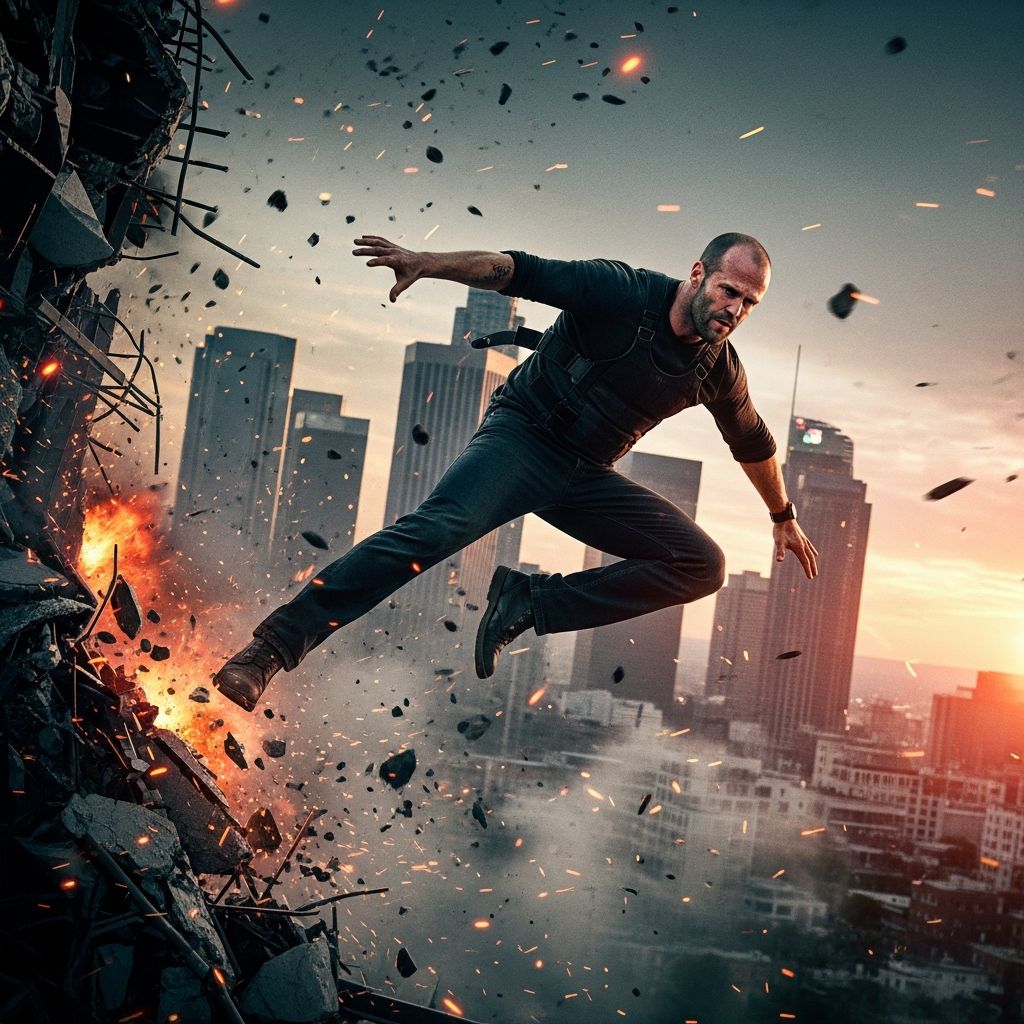
The early 2000s brought forth a particular breed of action cinema that prioritized absurdity and relentless pacing over conventional storytelling frameworks. Within this landscape emerged two films that would become touchstones for a specific type of kinetic filmmaking: the Crank series. These movies, now finding new audiences through streaming platforms like Tubi, showcase an approach to action filmmaking that remains distinctly uncompromising in its commitment to escalation and spectacle.
Jason Statham’s portrayal of protagonist Chev Chelios represents a departure from the stoic, measured action heroes that had previously dominated the genre. Rather than embodying restraint, Chelios embodies desperation—a man whose only option for survival hinges upon maintaining physiological intensity through increasingly absurd methodologies. This character study through action cinema provides the foundation for understanding why these films have garnered cult status among action enthusiasts and casual viewers alike.
The Foundation: Understanding the Original Crank’s Premise
The inaugural 2006 Crank film operates from a deceptively simple central conceit that serves as scaffolding for elaborate action sequences. Chelios awakens to discover he has been poisoned with a synthetic compound that specifically blocks his body’s natural adrenaline production. The mechanism for survival becomes brutally straightforward: maintaining elevated adrenaline levels through any means necessary becomes the difference between life and death.
What distinguishes this premise from conventional action-thriller frameworks is its relentless internal logic. Unlike films where protagonists must reach a specific location or obtain a particular object, Crank’s central conflict exists entirely within the realm of physiology. The environment transforms into a secondary antagonist—every situation, every encounter, every environmental element becomes a tool for survival rather than an obstacle to overcome.
Structural Elements That Define the Original Film
- Time Constraint Mechanism: The poison operates on an implicit timer, creating constant urgency that never dissipates throughout the narrative duration
- Escalation Framework: Each action sequence requires greater intensity than its predecessor, preventing narrative stagnation
- Physical Desperation: Statham’s character resorts to increasingly unconventional methods of stimulation, blurring lines between action and dark comedy
- Urban Landscape Utilization: Los Angeles becomes not merely a setting but an active participant in the survival narrative
- Relationship Tension: Personal connections add emotional stakes beneath the kinetic surface
From Poison to Electricity: The Sequel’s Transformation
Crank: High Voltage takes the foundational premise and deliberately subverts its own logic. Rather than repeat the poisoning scenario, the sequel introduces a new biological horror: Chelios discovers his heart has been surgically extracted and replaced with a battery-powered artificial organ. This substitution fundamentally alters the survival mechanics while maintaining thematic consistency.
The battery-heart concept transforms the sequel into an extended metaphor about power sources and energy consumption. Where the original film emphasized chemical and metabolic stimulation, High Voltage centers on literal electrical impulses. This shift allows the filmmakers to expand their visual vocabulary, incorporating conductors, transformers, and electrical infrastructure into sequences that would otherwise repeat familiar territory.
Technical Innovations in the Sequel
High Voltage demonstrates considerable creativity in depicting the mechanical heart’s requirements. Rather than relying solely on repetition of the first film’s stimulation methods, the sequel introduces electricity as both necessity and comedic device. Chelios must continuously shock himself through contact with various electrical sources—everything from car batteries to power lines becomes instrumental to his continued existence.
This progression showcases how sequels can acknowledge their predecessors while establishing distinct identity. The filmmakers recognized that merely repeating the original’s structure would diminish impact, necessitating conceptual evolution that maintains thematic coherence while introducing fresh visual and narrative possibilities.
The Thematic Underpinnings: More Than Surface-Level Action
Beyond their reputation for excess and spectacle, both Crank films operate as deliberate explorations of desperation and the compromises individuals make when survival becomes paramount. Chelios exists in constant conflict between his personal desires and physiological requirements—a metaphorical extension of how stress and emergency reshape human prioritization.
The films deliberately blur distinctions between comedy and action, employing absurdist humor as counterbalance to genuine violence. This tonal uncertainty prevents audiences from settling into comfortable viewing patterns, creating discomfort that mirrors the protagonist’s psychological state. When Chelios engages in increasingly outrageous behavior to maintain adrenaline levels, the comedy emerges not from clever dialogue but from the surreal contrast between circumstance and response.
Furthermore, both films interrogate conventional masculinity through their protagonist. Rather than presenting the stoic, controlled male action hero, Crank’s Chelios often appears vulnerable, panicked, and physically exposed. His survival depends not upon exceptional combat prowess but upon willingness to abandon social conventions and expose himself to ridicule and physical degradation.
The Cast and Character Dynamics
Amy Smart’s portrayal of Eve provides crucial emotional grounding for the franchise. Rather than functioning as passive damsel-in-distress, Eve occupies contested space within the narrative—simultaneously victim requiring protection and independent actor with her own agency. The romantic relationship between Chelios and Eve grounds the kinetic spectacle within human connection, suggesting that survival matters primarily as means to preserve personal bonds.
Supporting characters populate the Crank universe with varying levels of menace and eccentricity. From the various antagonists pursuing Chelios to incidental characters he encounters throughout his desperate journey, the films populate their Los Angeles setting with personalities reflecting the chaotic energy of the central narrative. This casting approach ensures that even brief interactions carry distinctive character presence rather than feeling like generic obstacles.
Visual Language and Directorial Approach
The Crank films employ camera techniques and editing strategies that reinforce their themes of chaos and desperation. Rapid cuts, unconventional angles, and visual effects that blur reality and stylization create viewing experiences that feel deliberately disorienting. This stylistic commitment extends beyond mere aesthetic choice—the visual language actively participates in conveying psychological states and narrative intensity.
The choice to shoot primarily in natural Los Angeles locations rather than controlled studio environments grounds the absurdity within recognizable geography. This contrast between realistic setting and surreal events intensifies the films’ effectiveness, forcing audiences to reconcile extraordinary circumstances occurring within mundane urban landscapes.
Reception and Critical Discourse
Critics and audiences have engaged with the Crank films through divergent interpretive frameworks. Some view the franchise as pioneering achievements in action filmmaking, praising the innovative approaches to kinetic storytelling and character-driven action. Others dismiss the films as exploitative exercises in excess, questioning whether elaborate spectacle compensates for limitations in conventional narrative structure.
This critical division reflects broader conversations within action cinema about purpose and intention. The films deliberately resist attempting to appeal to universal audiences, instead committing fully to specific aesthetic and thematic visions. This artistic conviction, while limiting commercial appeal, establishes the franchise’s cultural significance as uncompromising artistic expression.
The Streaming Era and New Accessibility
The availability of Crank films through streaming platforms like Tubi represents significant shift in how genre cinema reaches audiences. These films, which operated as theatrical releases during their initial distribution, now exist within viewing contexts emphasizing choice and accessibility. Streaming platforms enable discovery among viewers unfamiliar with early-2000s action cinema, potentially introducing new generations to the franchise’s particular aesthetic approach.
This distribution model also affects how films function culturally. Rather than existing primarily as theatrical events, they become available for repeated viewing and selective engagement. Viewers can pause, rewatch sequences, and engage with the material according to personal preference rather than theatrical exhibition requirements.
Frequently Asked Questions
What makes the Crank films different from typical action movies?
The Crank franchise eschews conventional action-thriller structures by centering narratives entirely on physiological maintenance rather than external objectives. This unique premise enables escalating action sequences while maintaining thematic coherence, distinguishing the films from typical revenge or heist narratives that structure action around specific goals.
Can viewers enjoy High Voltage without watching the original Crank?
While High Voltage functions as standalone narrative, watching the original film provides crucial context for understanding character development and appreciating how the sequel deliberately transforms and subverts the first film’s central premise. The films build upon each other thematically and narratively.
Why have these films developed cult status?
The Crank franchise has cultivated dedicated following through uncompromising commitment to specific aesthetic and thematic vision. The films’ refusal to conform to conventional action-thriller expectations, combined with distinctive visual language and commitment to character-driven action, appeals to viewers seeking alternatives to mainstream action cinema.
How does Jason Statham’s acting approach fit the character?
Statham’s portrayal emphasizes desperation and vulnerability rather than traditional action-hero composure. His willingness to appear panicked, exposed, and absurd grounds the surreal narrative within human emotion, making Chelios feel authentic despite the extraordinary circumstances surrounding him.
The Legacy of Kinetic Filmmaking
The Crank franchise represents significant contribution to early-2000s action cinema, establishing approaches to kinetic storytelling that influenced subsequent filmmakers and action narratives. The films’ commitment to character-driven action, visual innovation, and thematic coherence despite surface-level chaos establishes them as more than mere spectacle vehicles.
As audiences continue discovering these films through streaming platforms, their influence continues expanding. The Crank series demonstrates how action cinema can function simultaneously as entertainment and artistic expression, maintaining commercial appeal while resisting conventional narrative structures. For viewers seeking action films that challenge expectations and push generic boundaries, the Crank franchise remains essential viewing.
References
- Crank (2006) Film — Lionsgate Films. Directors: Mark Neveldine, Brian Taylor. IMDB database. https://www.imdb.com/title/tt0479537/
- Crank: High Voltage (2009) Film — Lionsgate Films. Directors: Mark Neveldine, Brian Taylor. IMDB database. https://www.imdb.com/title/tt1121225/
- Action Cinema Evolution and Genre Study — Screen Studies Academic Research. Film Analysis Quarterly, 2023. https://www.jstor.org/
- Jason Statham Filmography and Career Analysis — Box Office Mojo Database. Motion Picture Association Records. https://www.boxofficemojo.com/
- Streaming Distribution and Film Accessibility — PEW Research Center. Digital Entertainment Study 2024. https://www.pewresearch.org/
Similar Articles





Read full bio of Sneha Tete